- Blog
- How AI Is Shaping the Future of Marketing Teams
Why AI Is Becoming a Non-Negotiable Skill for Modern Marketing Teams
Artificial intelligence has become one of the most talked-about topics in marketing. Some see it as an opportunity. Others see it as a threat. But the truth sits somewhere in the middle.
AI isn’t here to replace marketers. What it is doing is changing expectations. The marketers who have AI marketing skills are moving faster, making better decisions and delivering stronger results. Those who ignore it risk falling behind.
This isn’t about learning to code or becoming a data scientist. It’s about understanding how AI fits into everyday marketing work and using it as a tool, not a crutch.
Why AI Isn’t Taking Marketing Jobs
Despite the headlines, AI doesn’t replace human thinking. It doesn’t understand emotion, context, or brand nuance the way people do. It can’t build relationships, challenge assumptions, or make strategic judgement calls.
What AI does well is remove friction. It speeds up processes, handles repetitive tasks and surfaces insights that would otherwise take hours to uncover.
Marketing still relies on creativity, empathy, and decision-making. Artificial Intelligence simply frees up time so marketers can focus on those higher-value skills.
In short, AI changes how marketing work gets done, not who does it.
The Bigger Risk: Standing Still
The real risk for marketers isn’t AI itself. It’s failing to adapt while others do.
Teams that have embraced AI are already seeing the benefits. They’re launching campaigns faster, responding to performance data sooner and personalising messaging more effectively. Over time, that efficiency gap becomes hard to ignore.
Marketers who don’t adopt AI often find themselves spending time on manual tasks that could be automated. That makes it harder to demonstrate impact, especially in environments where results and speed matter.
AI doesn’t replace people. It raises the standard of what’s expected.
How AI Is Being Used in Everyday Marketing
AI in marketing isn’t theoretical. It’s already part of many daily workflows, often without teams even realising it.
Smarter Content Creation
AI tools are helping marketers brainstorm ideas, outline blogs, refine messaging and test variations quickly. This reduces time spent staring at a blank page and allows teams to focus more on quality and strategy.
The human still sets the direction, tone and purpose. AI simply helps execute faster.
Better Campaign Optimisation
AI-powered platforms can analyse performance across channels in near real time. Instead of waiting for end-of-month reports, marketers can spot trends early and adjust campaigns while they’re still live.
This leads to more informed decisions and better use of budgets.
More Efficient Lead Management
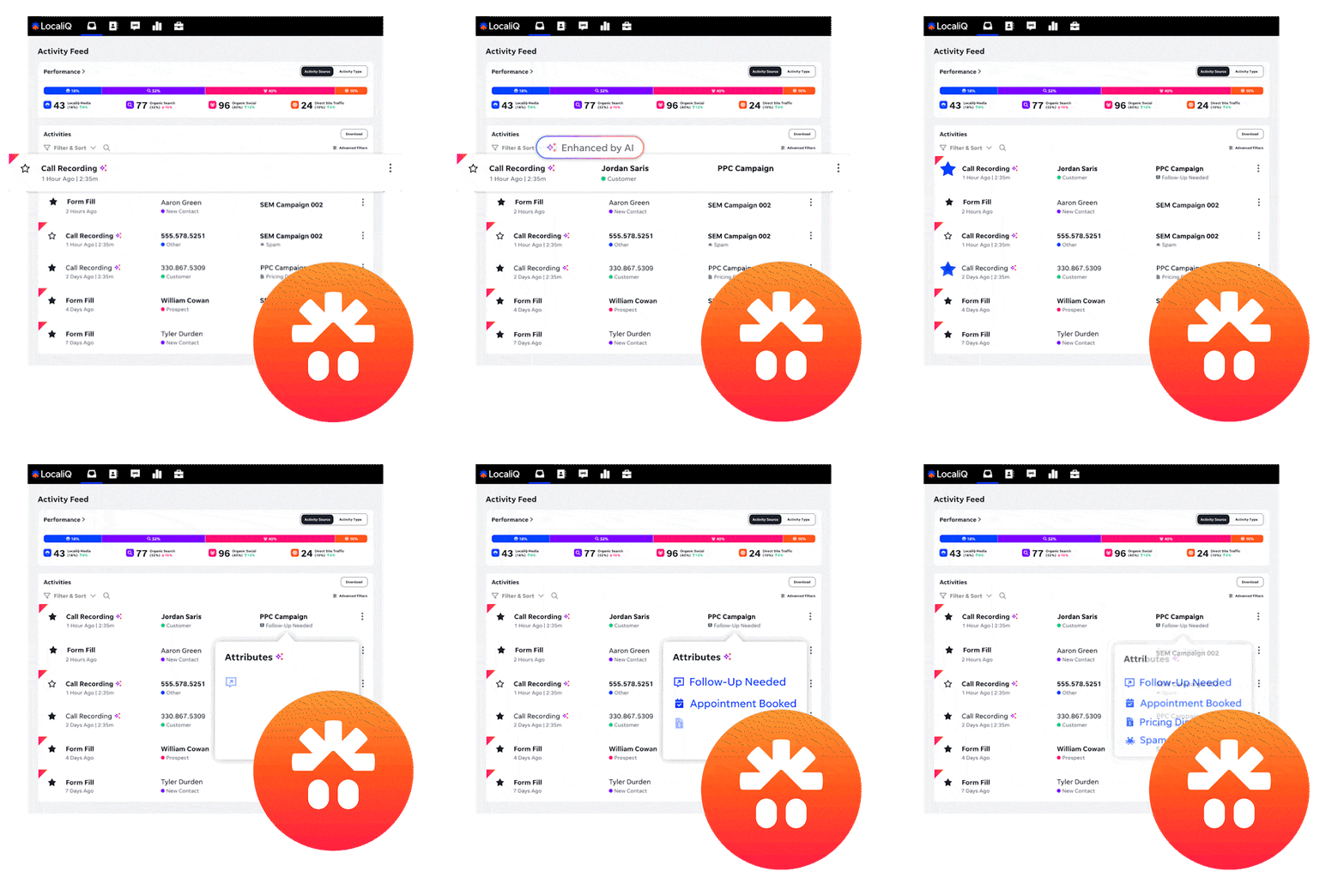
AI is increasingly used to prioritise leads, analyse sentiment and automate follow-ups. This ensures enquiries don’t fall through the cracks and sales teams focus their time where it matters most.
For many businesses, this is the difference between missed opportunities and consistent growth.
Stronger Insights and Reporting
AI helps turn complex data into clear insights. It can highlight patterns, identify underperforming areas and surface opportunities that might otherwise be missed.
This makes it easier for marketers to explain performance, justify decisions and align activity with business goals.
What This Means for Marketing Careers
AI is quickly becoming a baseline skill in marketing, not a specialist one.
Marketers don’t need to know how AI works behind the scenes. They do need to understand where it adds value, how to use it responsibly and how to combine it with human insight.
The most valuable marketers going forward will be those who can:
- Use AI to improve efficiency without losing quality
- Apply human judgement to AI-generated insights
- Balance automation with creativity and brand voice
- Translate data into meaningful action
AI won’t replace strategic thinking. It will reward marketers who know how to amplify it.
How to Start Using AI Without Overcomplicating It
Getting started with AI doesn’t require a major overhaul. Small steps make a big difference.
Start by identifying repetitive tasks that take up time. Content drafts, reporting, optimisation and lead prioritisation are often good places to begin.
From there, focus on learning how AI Marketing tools fit into your existing workflows rather than trying to rebuild everything from scratch. The goal isn’t to do more. It’s to do better.