- Blog
- Why Smart Business Owners Are Automating the Work That Drains Them
Burnt Out and Still Busy?
Running a small business can be incredibly rewarding. It can also be exhausting. Between answering calls, replying to enquiries, managing staff, handling bookings, chasing invoices and trying to grow the business, many owners find themselves working longer hours than they ever expected.
For many Australian entrepreneurs, the problem isn’t lack of opportunity. It’s a lack of time, but when every task lands on your plate, burnout becomes a very real risk.
But here’s the good news: the businesses growing the fastest today aren’t necessarily working harder. They’re working smarter by removing the repetitive work that drains their energy.
The Trend: Small Business Owners Are Under Pressure
According to the Australian Bureau of Statistics, small businesses make up more than 97% of all businesses in Australia.
Most of these businesses operate with small teams or even a single owner managing multiple responsibilities.
At the same time, expectations from customers are rising. Today’s customers want -Fast responses, easy booking processes, immediate answers to questions and availability outside standard business hours.
For many business owners, this creates a difficult balance. You’re trying to grow your business while also being the receptionist, salesperson, operations manager and customer service team all at once. Over time, that constant pressure leads to fatigue.
Burnout isn’t just about feeling tired. It affects decision-making, productivity and the long-term sustainability of the business.
The Reality: Being Busy Doesn’t Always Mean Being Productive
Many entrepreneurs assume that working longer hours equals better results. But in reality, a lot of business owners spend significant time on tasks that don’t actually grow the business.
Think about how much time is spent on things like answering the same questions repeatedly, scheduling appointments, listening to call recordings, writing follow-up emails and returning missed calls.
Individually, these tasks seem small. But across a week or month, they can consume hours of valuable time. That’s time that could be spent on strategy, sales, improving customer experience, expanding services and building partnerships. Successful businesses often grow not by doing more work, but by removing unnecessary work.
Strategy: Focus on High-Value Work
Avoiding burnout doesn’t mean stepping away from the business. It means shifting your focus toward the work that actually drives growth.
Here are a few practical strategies business owners are adopting:
1. Protect Your Time
Block time in your calendar for strategic work instead of allowing operational tasks to fill every gap.
2. Simplify Customer Enquiries
Make it easy for customers to find answers and book appointments without needing manual responses.
3. Reduce Repetitive Admin
Rule of thumb, if a task happens dozens of times each week and takes a chunk of time off your plate, it means it’s a strong candidate for automation.
4. Prioritise Lead Follow-Up
The faster you respond to potential customers, the higher your chance of winning the business. When these areas are managed efficiently, business owners gain something incredibly valuable: headspace.
And that headspace allows better decisions, stronger leadership and healthier work-life balance.
Tools: How Automation Is Helping Small Businesses Reclaim Time
Technology is becoming one of the most effective ways to reduce operational pressure. Today, automation tools can take care of many routine tasks that once required manual work.
For example:
AI Call Agents
These tools can answer inbound calls instantly, gather customer information and route enquiries to the right place.
Smart Scheduling
Customers can book appointments directly into your calendar without needing phone calls or email back-and-forth.
Lead Management Platforms
Every enquiry is tracked, organised and prioritised so no opportunities are missed.
Automated Follow-Ups
Instead of chasing leads manually, automated emails and reminders keep conversations moving. The goal isn’t to remove the human element from your business. It’s to remove the repetitive tasks that prevent you from focusing on what you do best.
Why This Matters for Australian SMBs
Operating costs are rising across Australia, from wages to rent and utilities. Hiring additional staff to manage admin tasks isn’t always feasible, especially for small businesses. At the same time, customer expectations continue to grow.
People expect quick responses, easy booking and smooth communication. Businesses that rely purely on manual processes often struggle to keep up. But businesses that use technology to streamline operations can stay responsive without increasing their workload.
The result? Better customer experiences and less stress for business owners.
A Smarter Way to Work Without Burning Out
This shift is exactly why platforms like Dash Convert are gaining traction among Australian small businesses.
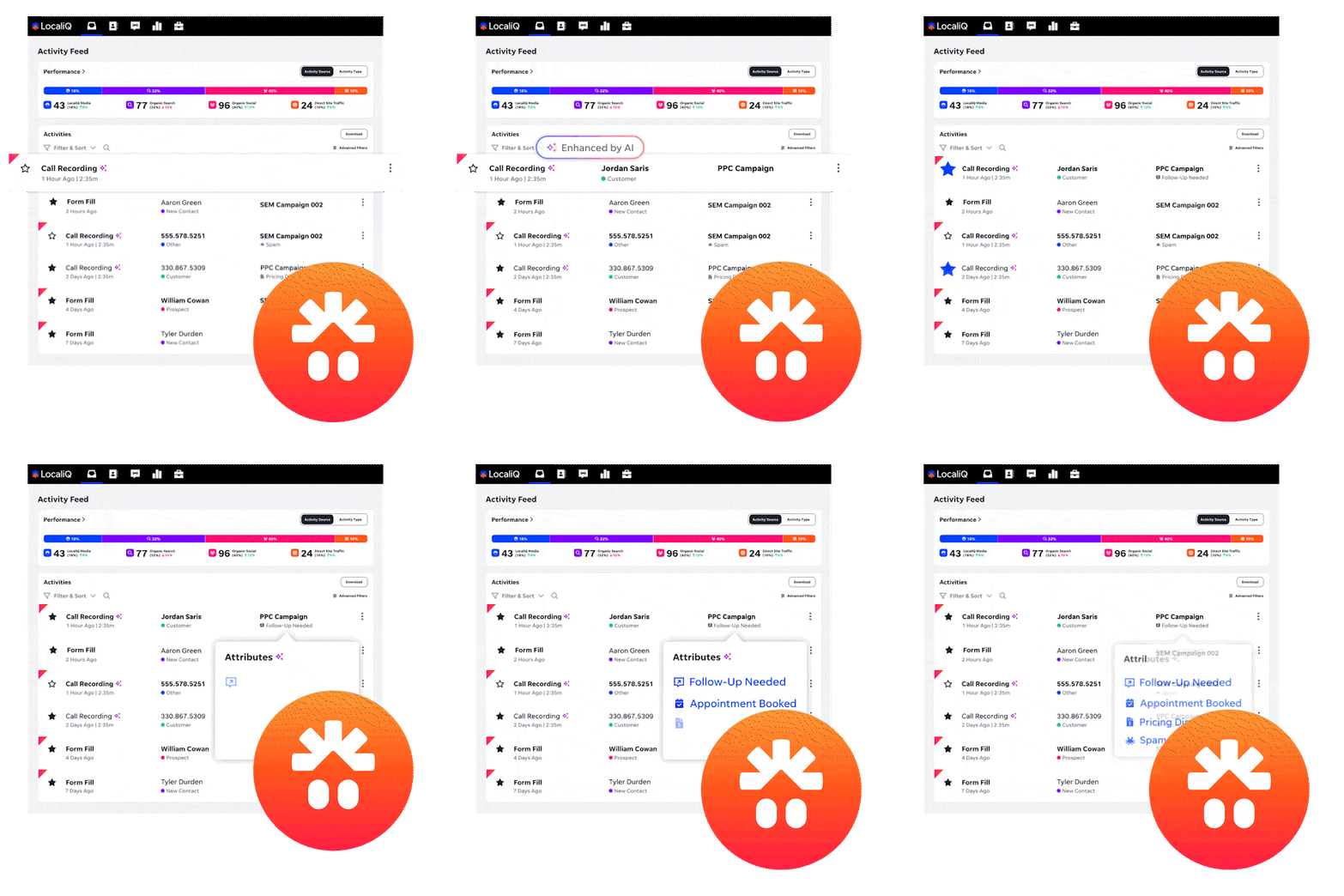
Dash Convert combines an AI Call Agent that answers and qualifies calls instantly, a built-in scheduler that books appointments automatically and lead management tools that organise every enquiry in one place. Instead of juggling calls, emails and bookings manually, business owners gain a system that keeps everything moving in the background. That means fewer missed opportunities and fewer late nights catching up on admin.
Remember, success in business shouldn’t come at the cost of your wellbeing. Sometimes the smartest move isn’t doing more work. It’s letting technology take care of the work you shouldn’t have to do in the first place.